
I arrived in Bhutan with a very specific idea of what spiritual travel looked like: thin mattresses, cold mornings, simple food eaten in silence. I grew up Buddhist, and somewhere along the way I had absorbed an unspoken certainty: that discomfort was the price of presence, and that luxury was a distraction from the real work of waking up. What I didn’t expect was to have that belief dismantled, gently and completely, by a country whose entire governing philosophy is built around happiness.
I was in Thimphu, tucked into the Himalayan foothills at 7,700 feet, on a personal pilgrimage. I’d planned a week of Bhutanese spiritual practice, mindfulness, and stillness. I would hike to clifftop monasteries, chant with monks, sit in silence until I emerged enlightened. And if I didn’t, I’d skip dinner and sit longer. I approached the whole thing the way some travellers follow a map: too closely to notice where they actually are.
What complicated the experience was how little I questioned the setting I had chosen. Bhutan, in my mind, was austere, remote, defined by monasteries and mountain paths, not by luxury hospitality, so I booked without thinking twice about what that might mean once I arrived.
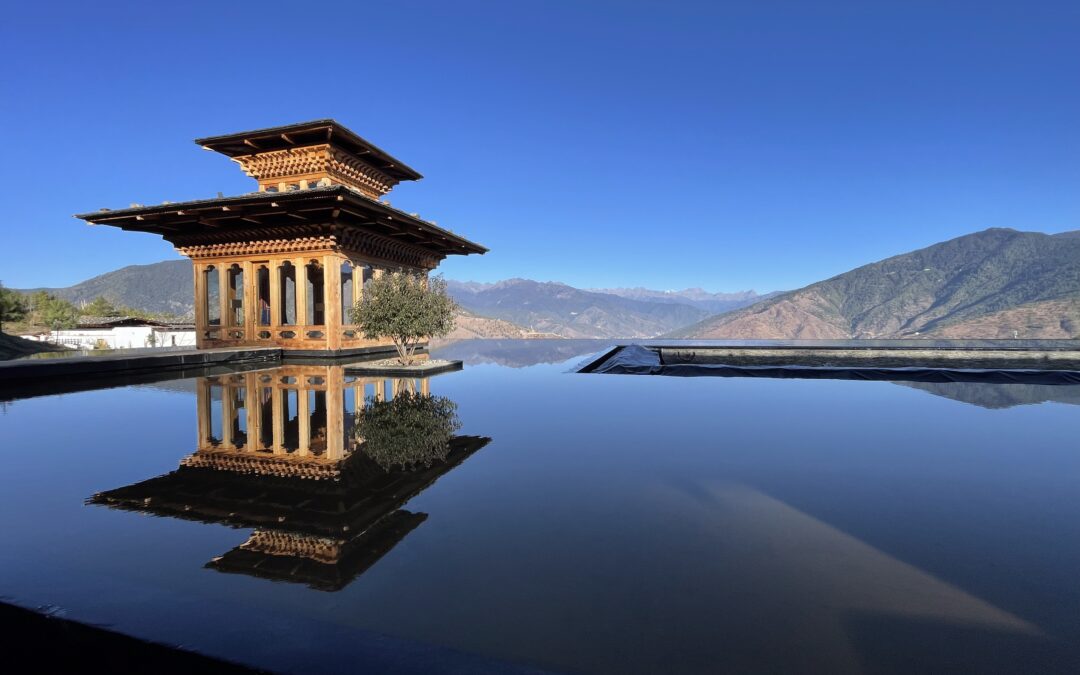
Six Senses Thimphu sits on a forested ridge above the city, a collection of timber-and-stone villas that feel less like a hotel and more like an idea of how a life could be lived. The architecture borrows from traditional dzong craftsmanship: thick walls, carved wooden screens, deep overhanging eaves, but the interiors are warm and unhurried, full of handwoven textiles, locally sourced stone, and views that stop you mid-sentence.
On the first morning, I stood on my private deck in the cold dawn light, watching clouds move through the pine ridges, and felt an unmistakable pang of guilt in my chest. This couldn’t be a spiritual journey; it was too comfortable to qualify as one….
Read full article at Wander Magazine.